 Itemlume
TESTED WORKFLOW · SEPTEMBER 12, 2026
A two-reference product photo workflow, tested once and documented honestly.
This example records one completed Itemlume test: a fictional adult model portrait was generated, selected, saved as a private model reference, and submitted with a product photo to create the second image below. It shows that the configured request path completed; it does not prove repeatable identity across a campaign.
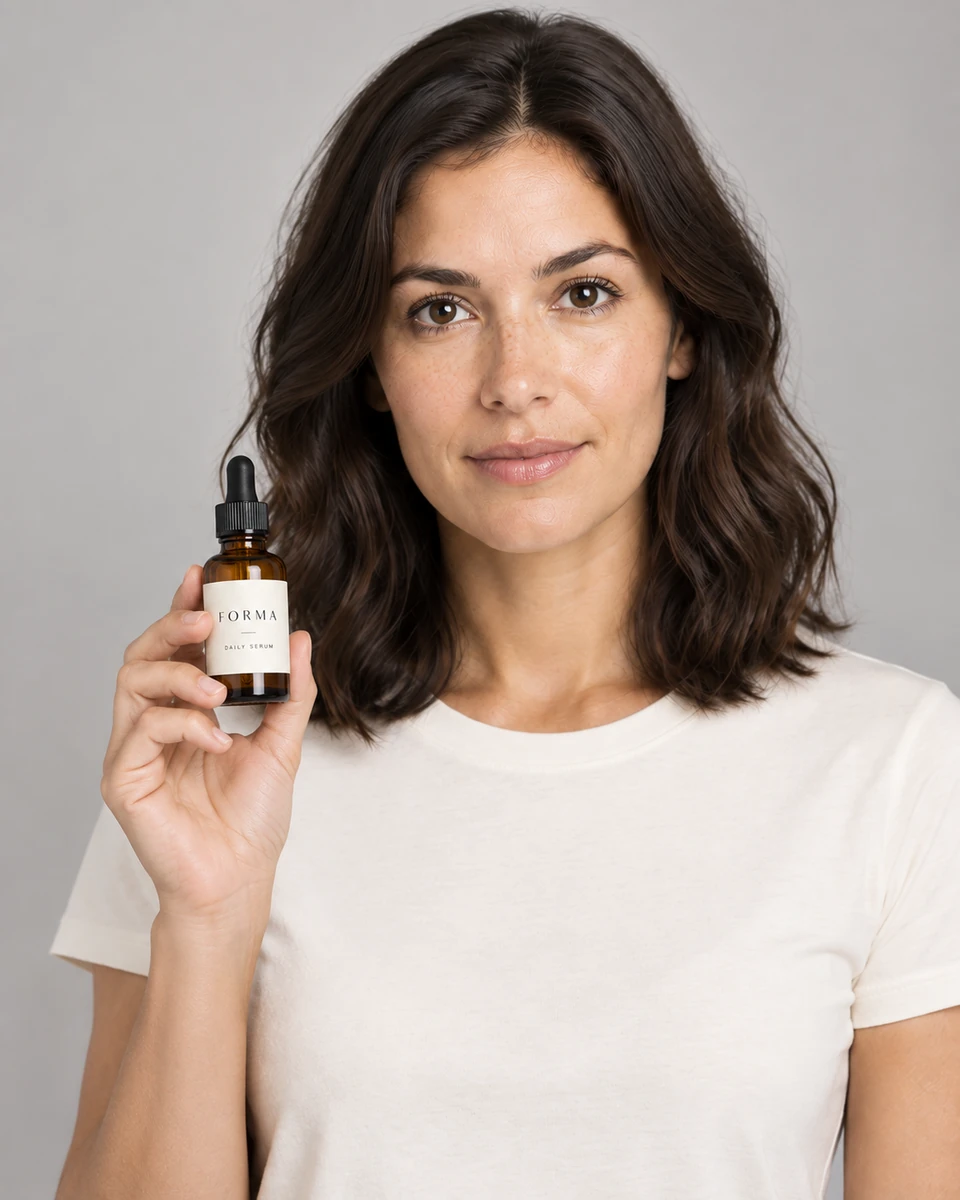
The reference and the tested result

What was actually done
- Generate an adult fictional portrait.A text-only portrait request produced the reference shown above.
- Select and save it.The chosen portrait was named and stored in the account’s private model library.
- Submit two ordered image references.The product image was sent as the product source and the saved portrait as the identity reference. The recorded task reports two references.
- Review the result manually.The face’s main cues, hairstyle, and visible product label were inspected in this single output.
What this test does and does not establish
Supported by this run
- the portrait-generation route returned a usable image
- the saved model reference could be retrieved for a later image request
- the combined request contained separate product and identity references
- the second request returned an image that could be reviewed and saved
Still unproven
- identity continuity across many poses, outfits, scenes, or batches
- product fidelity across transparent, reflective, wearable, or fine-detail categories
- a repeatable acceptance rate, cost per approved asset, or completion time
- commercial performance or sales impact
How to run a stronger evaluation
Use a fixed reference and a written acceptance checklist. Generate several scenes without discarding weak outputs, then record identity changes, hand and anatomy defects, label errors, product-shape errors, retries, and provider cost. A credible consistency claim requires the full set, not a selected example.
Use the product image review guide to define the visual checks before testing.
Frequently asked questions
Is the person in this example a real customer or spokesperson?
No. The public example uses an AI-generated fictional adult model. It is not presented as a customer, employee, or endorsement.
How many combined model-and-product examples were tested?
One combined image is documented here, following one fictional portrait generation. This is a workflow check, not a statistical benchmark.
Was the identity model specially trained?
No. The chosen portrait was reused as an image reference. The current workflow does not train a dedicated identity model.
Can this example guarantee the same result for my products?
No. Results depend on the references, prompt, product details, provider behavior, and review criteria. Each output needs independent inspection.
BUILD FROM A PRODUCT YOU KNOW
Put this workflow into practice with your own product.
Explore the relevant tool first. AI copy and concept planning are free after sign-in. Image and video generation require available credits and the applicable account access.
Open AI models Check pricing and credits