 Itemlume
Image remix / PRACTICAL ANSWER
How should AI describe a refurbished item without hiding its actual defects?
Use the actual inspection record and visible defects. A condition label is not permission to write that the item is flawless.
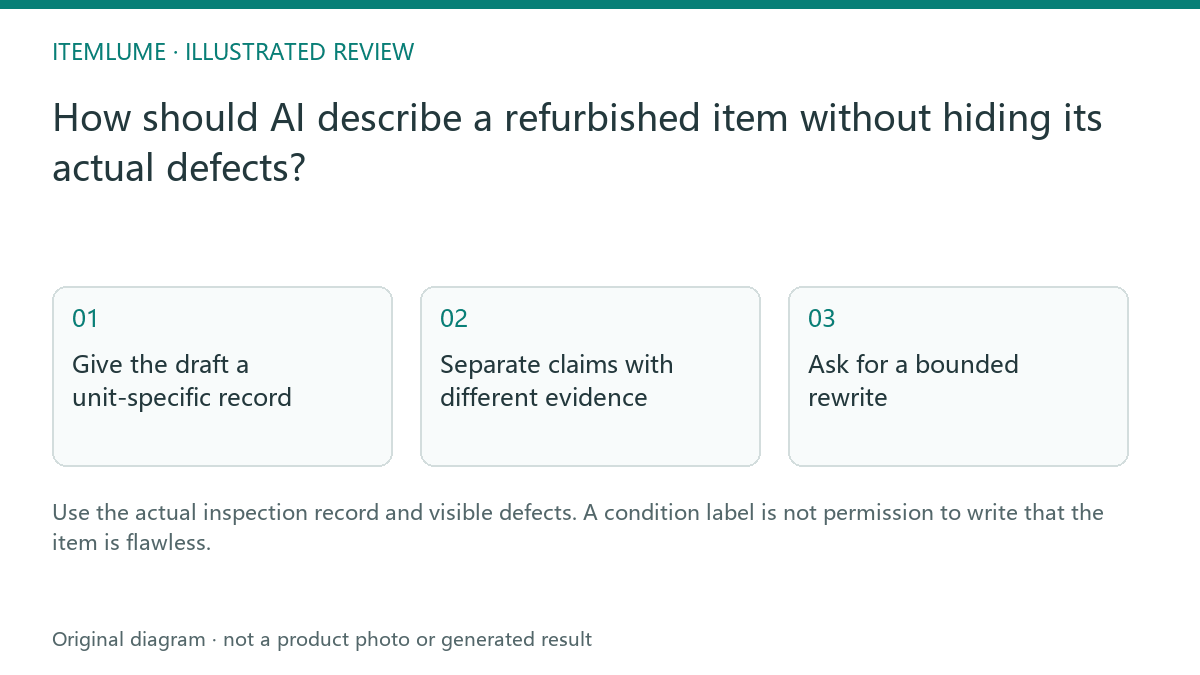
Give the draft a unit-specific record
A fictional seller lists a refurbished speaker with a small rear scratch and a replaced charging cable. The source says the unit passed the seller’s stated functional checks. An AI draft changes this to “like new, untouched and complete.” Those are new claims. Supply the unit’s actual condition, included items, repairs and observed defects before asking for polished copy.
Google’s condition field distinguishes catalog conditions for its destination. It is not a universal grading system that defines every seller’s “Grade A.” Keep the seller’s own grade definition available and consistent with the unit record.
Separate claims with different evidence
| Statement | Needed record | Copy decision |
|---|---|---|
| Refurbished | Actual condition classification | Use the applicable destination wording |
| Rear scratch | Unit photograph/inspection | Describe location honestly |
| Function checked | Recorded inspection scope | State only the checks established |
| Complete accessories | Actual inventory | List what is included |
Do not let a clean generated scene replace the defect photograph. The image and copy must describe the same physical unit.
Ask for a bounded rewrite
Instruct the text model to improve clarity without deleting defects, upgrading the condition or extending the inspection scope. Require unknown fields to remain unknown. Put the significant condition information near the purchasing decision rather than burying it after unrelated promotional paragraphs.
For the speaker, a useful draft can explain the recorded scratch and included replacement cable without speculating about lifetime, battery performance or factory certification. The example is fictional and provides no actual inspection result.
Compare before publishing
Review the draft beside the unit record and actual photographs. Check the condition shown in the store and applicable feed. If the physical unit changes, do not reuse the same unit-specific text without inspection. Itemlume’s free text planning can help draft the description, but it does not refurbish, inspect or certify the merchandise.
Sources and further reading
Sources for this page were checked on . Platform rules can change; verify the current source before publishing. Prompt examples and workflow recommendations are Itemlume editorial guidance, not independently measured results.
Frequently asked questions
Does Grade A mean flawless everywhere?
Use the seller’s actual published definition and unit evidence.
Can a generated clean photo hide the defect?
Keep accurate unit-specific condition information.
Does the model certify function?
No. Use the actual inspection record.
BUILD FROM A PRODUCT YOU KNOW
Put this workflow into practice with your own product.
Explore the relevant tool first. AI copy and concept planning are free after sign-in. Image and video generation require available credits and the applicable account access.
Open Image remix Check pricing and credits